| |
Amazon’s #1 books of the last 25 years |
One of the things
I appreciate about Amazon’s yearly best-of lists is that they commit to naming a #1, an actual Book of the Year. Fewer publications and retailers do it than you might think. Amazon editors have rounded up their #1 picks from the top 25 years, and it’s a fascinating snapshot of the century in books so far. There are enduring sensations (
Life of Pi, The Underground Railroad, Educated), in-the-moment hits that didn’t age so well (I’m looking at you, James Frey), and reader favorites (
Everything I Never Told You,
Fates and Furies). Some #1s were flashes in the pan (The Art of Fielding), where others resulted in real-world change (
The Immortal Life of Henrietta Lacks
). It’s too soon to know how the most recent #1s will stand the test of time, but I feel pretty good about The Heaven & Earth Grocery Store‘s chances and will remain equal parts confused and impressed that they zagged with The Boys of Riverside when James
was clearly the story of 2024.
Perhaps the most interesting thing about these selections is how varied they are. "Book of the Year" can mean a lot of things. – RS 📫 What are your contenders for 2025, and why? Shoot us an email: thenewsletter@bookriot.com. We may share it in an upcoming edition. |
|
|
| |
Does genre really matter? |
The publishing industry is built around genre. Agents specialize in certain genres. Imprints are branded to appeal to genre-specific readers. Marketing copy emphasizes genre. Bookstores and libraries are organized by genre. Genre is everywhere and seems all-important, but does it really matter?
Let’s go to the data. English professor, data scientist, and literary historian Laura McGrath dropped by the Book Riot Podcast last week and blew our minds sharing recent findings from top researchers. A few of the highlights: - 🤩 Contrary
to publishing’s conventional wisdom, most highly active readers have omnivorous taste.
- 🤓 Literary fiction readers have the most eclectic reading habits, reading widely across genres.
- 💕 Romance readers have less eclectic habits across genres but read widely within the romance sector.
- ❗️Among heavy readers, sticking to a favorite genre appears to be the exception, not the rule.
It sure looks like publishing has been overestimating the importance of genre.
→ Learn more about these studies, and hear our whole conversation with Laura McGrath. |
|
|
| |
Embrace cozy season with a good book! Let the professional book nerds at Tailored Book Recommendations help you find your perfect read. Simply complete a survey about your reading tastes, and our expert bibliologists will hand-pick three books just for you.
Get started for just $18! |
|
| | | |
In October of 1849, a man boarded a steamship in Richmond, Virginia en route to New York. On October 3rd, he was found incoherent and possibly intoxicated at a Baltimore tavern, and four days later, he was dead. The cause of his death remains a mystery, though theories abound, ranging from epilepsy to a voter fraud plot gone awry.
That man was Edgar Allen Poe, the iconic poet, author, editor, literary critic, and pioneer of genre fiction. His dark, twisty, macabre stories became the blueprint for modern horror, the psychological thriller, and the detective novel as we know it today. Without Poe, we don’t get Sherlock—I like to bust that one out at parties.
But my man Poe is known just as much for his unsavory reputation as his literary feats, and that brings me to my other go-to bit of trivia: that reputation is primarily the work of a frenemy-turned-professional hater. He got his feelings hurt by a sassy review and took “I’ll show you” to another level. That level was posthumous fabrication.
🎧
Hear more about Poe’s path to literary fame, his mysterious end, and how one dude’s hateration left an indelible mark on his legacy on this week’s Book Riot Podcast. –VD
|
|
|
| |
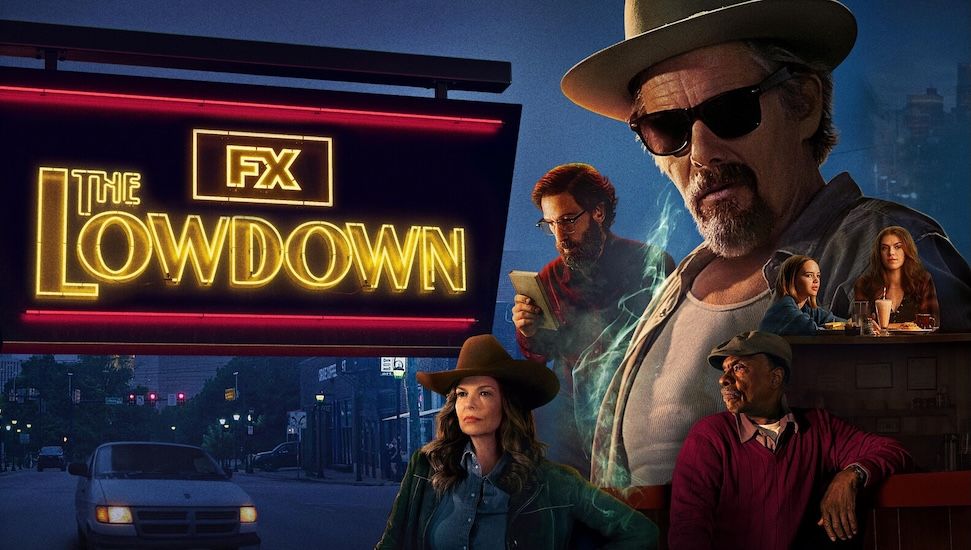
The Lowdown is TV for book lovers |
I was already in love with The Lowdown. A gritty noir
about a used bookstore owner in Tulsa who moonlights as a "truthstorian" publishing exposés of local figures, created by Sterlin Harjo and starring Ethan Hawke, is about as good a pitch for a TV show as I can imagine. The show has reading in its DNA: Hawke’s literary bona fides are well documented, and Harjo’s body of work makes it clear that he knows his way around the canon and the mass market mystery shelves. Walter Mosely is a consulting producer. A dead man’s books play a key role in the mystery at the heart of The Lowdown
. Characters toss off literary references in casual conversation. The jokes are just. so. smart. This show is a vibe. It’s a perfect marriage of highbrow and lowbrow. When Peter Dinklage shows up in episode 5 as Hawke’s character Lee Raybon’s former business partner, he chastises Raybon for shelving The Odyssey next to As I Lay Dying
. Raybon defends himself; they’re both books about journeys. Dinklage’s character growls in reply, "Getting Mama home is not the same as getting home to Mama." If that made you smile, this show is for you. 📺 The Lowdown is available on FX and Hulu. – RS |
|
|
| |
Poetry is for everyone.
That’s why the Poetry Foundation offers its online resource of thousands of poems, articles, podcasts, and more for all to freely enjoy.
Poetry is everywhere.
It’s already in the songs you listen to, the stories you tell, and the notebook of the person next to you on the bus. From Chicago with love.
Chicago is the pulse of poetry. We’ve called it home since the beginning, starting with the founding of Poetry Magazine here in 1912. We see poetry alive and well in this city we love, and share it gladly with the world. |
|
|
| |
I cannot get enough of the recent jewel-heist at the Louvre. I love non-violent true crime books
, and stories about boosting art are at the top of that list. It’s both criminal and cosmopolitan (cloakroom and dagger if you will). Here are some books to tide you over until this poshest of burglaries is solved. Fiction
💰 Portrait of a Thief by Grace Li: A Harvard undergrad recruits a squad of co-conspirators to steal back looted Asian art–and make a pretty penny in the process. 🔎
The Museum Detective by Maha Khan Philips: A museum curator is called in to figure why a sarcophagus, mummy included, was found in a remote area of Pakistan as part of a narcotics operation. She finds that the story is even more complicated than she imagines and is even connected to a missing person from her own life. Nonfiction
🏛️ The Mona Lisa Vanishes by Nicholas Day, illustrated by Brett Helquist: This middle-grade nonfiction account of the 1911 theft of the “Mona Lisa” shows not only what happened but chronicles how the scandal that followed propelled the painting into being “the most famous painting in the world.”
🪖 Monuments Men: Allied Heroes, Nazi Thieves, and the Greatest Treasure Hunt in History
by Robert Edsel: In the waning days of World War II (and some not-so-waning days, really), a group of scholars arrives with Allied forces to identify, find, and recover the thousands of works of art that the Nazis have stolen across Europe. The book was turned into an inexplicably turgid movie starring George Clooney, so while that can be safely avoided, this story is fascinating, educational, and downright thrilling. 🖼️
Adventures in the Louvre: How to Fall in Love with the World’s Greatest Museum by Elaine Sciolino: Not a heist book here, but a multi-angle paean to the Louvre itself. I fell in love with All the Beauty in the World a few years ago and thought at the time I would read memoirs/histories of any number of museums, with the Louvre at the top of the list. Adventures in the Louvre delivers just that. – JO |
|
|
| |
Black women shaped the United Nations |
The United Nations will mark its 80th anniversary tomorrow. Here’s historian Keisha N. Blain with a look at how Black women’s work on human rights contributed to the U.N.’s creation and ongoing influence.
The establishment of the United Nations in October 1945 represented a monumental shift in human rights history. Beyond its influence on shaping human rights discourse in the global world order, the UN provided new avenues for Black Americans to agitate for rights and freedom on behalf of all colonized and oppressed people. Black women
were instrumental to these efforts—even during the UN’s formative years. Educator Mary McLeod Bethune, the only African American woman at the founding conference in San Francisco, helped to draft the Charter of the United Nations. She lobbied for the Charter to address colonialism, and she emphasized the significance of education as well as an international bill of rights. Though her influence was limited in scope—Bethune could only offer advice and try to steer the American delegates in a more equitable direction—it was nonetheless a unique and vital opportunity for Bethune to shape the mission and tone of the organization’s founding document.
Other Black women helped to advance human rights in more formal roles at the United Nations during these early years. For example, Martinican writer Paulette Nardal served as an area expert for the UN from 1946 to 1948. She worked for the UN’s Department for Non-Autonomous Territories as well as the Commission on the Status of Women. Much like Bethune, Nardal advocated for expanded women’s rights and the end of colonialism. Black American women such as Sabella Culpepper and Priscilla McDonald supported the work of the UN in behind-the-scenes roles as secretaries.
Because of their status in a predominantly white and male-dominated organization, Black women had to find ways to assert their voices and leave a mark while recognizing that their presence alone represented a challenge to the social order. While much of the work they performed on behalf of the UN during these early years was invisible, Black women performed the day-to-day activities that helped to expand the organization’s reach and influence.
📘 Learn more in Dr. Blain’s book, Without Fear: Black Women and the Making of Human Rights. |
|
|
| |
Cute and functional? Yes please! Protect your phone from all of life’s tumbles with a MagSafe compatible case from OtterBox
. We’re obsessed with this textured embroidered case made from sustainable cactus leather. Grab yours today, plus score up to 50% off sale items for a limited time! |
|
|
| |
Laurie Halse Anderson, born October 23, 1961 |
|
|
| | You are now free to roam about the internet |
🕯️ Set the mood for your next reading session with a cozy
burrata-shaped candle.** 🚫 Catch up: A Virginia district has ordered the Department of Defense Education Activity to restore books it removed from school libraries.
🎙️ Register for a free livestream of National Book Award finalists reading from their nominated works. 😍 Read about the love story that
inspired Joe Hill’s new horror novel. 🍿 Watch Ethan Hawke break down his career, from Dead Poets Society.
**
This is a product recommendation from the Book Riot team. When you buy through these links, we may earn a commission.
|
|
|
| |
Written by Rebecca Schinsky, Jeff O’Neal, and Vanessa Diaz. Thanks to Vanessa Diaz for copy editing. Did someone forward you this email? Sign up here. Got a tip, question, comment, or story idea? Drop us a line: thenewsletter@bookriot.com. |
|
|
|
This content contains affiliate links. When you buy through these links, we may earn an affiliate commission.
|
|
|